Privacy and control
Your family's information belongs to your family. Not to us.
A family tree usually means putting a lot of private information in one place: birthdates, phone numbers, where people live, photographs of children. Ukoo Yangu is built around one rule. That information stays inside your family, and inside it, each person controls their own.
No public trees, ever
There is no public search, no directory of families, and no way for somebody outside your family to find out that your family has a tree here. The only way in is an invitation from somebody already on it, or starting a tree of your own.
That holds at the front door too. When somebody gives an address to come in, the answer is identical whether or not that address already belongs to an account, and the code goes to the address rather than to the screen. Nobody is ever told who is already here, including by trying.
You control your own information, not just your family as a whole
The whole family
Anyone in the tree.
People you choose by name
You pick exactly who, relative by relative.
The stewards only
Whoever looks after the family's tree, and nobody else.
Nobody but you
It stays on your own record and goes no further.
This is set by the person the information is about, not by whoever added them to the tree. If your uncle adds you to the family tree, he can write down that you exist and how you are related. He cannot decide who gets to see your phone number. Only you can, and not even a steward can change your settings on your behalf.
Stewards do keep access to what you hide from other relatives, because they are accountable for the archive and cannot look after what they cannot see. What they cannot do is change your settings, and they cannot agree to your name going on a poster.
Nothing is decided in your browser
What you are allowed to see is worked out on the server before anything is sent, so what is hidden from you is genuinely absent from the response rather than merely not drawn on the screen. The same goes for photographs: every image is fetched with your own session and checked against your membership each time, so a copied image link does nothing in anybody else's browser.
Removing something does not break the tree for everybody else
If you ask for your information to be limited or taken down, here is what happens. Your name is reduced to an initial and your details are cleared, but your place in the tree stays, connected the same way it always was.
That is on purpose. If somebody's father asks to be removed after a divorce, he is still his child's father, and deleting him outright would erase that child's own history along with his. Full removal is also possible, where everything about you disappears completely. It is a separate, deliberate step, and the archive says who else would be affected before anybody does it.
Any request like this gets a response within a month.
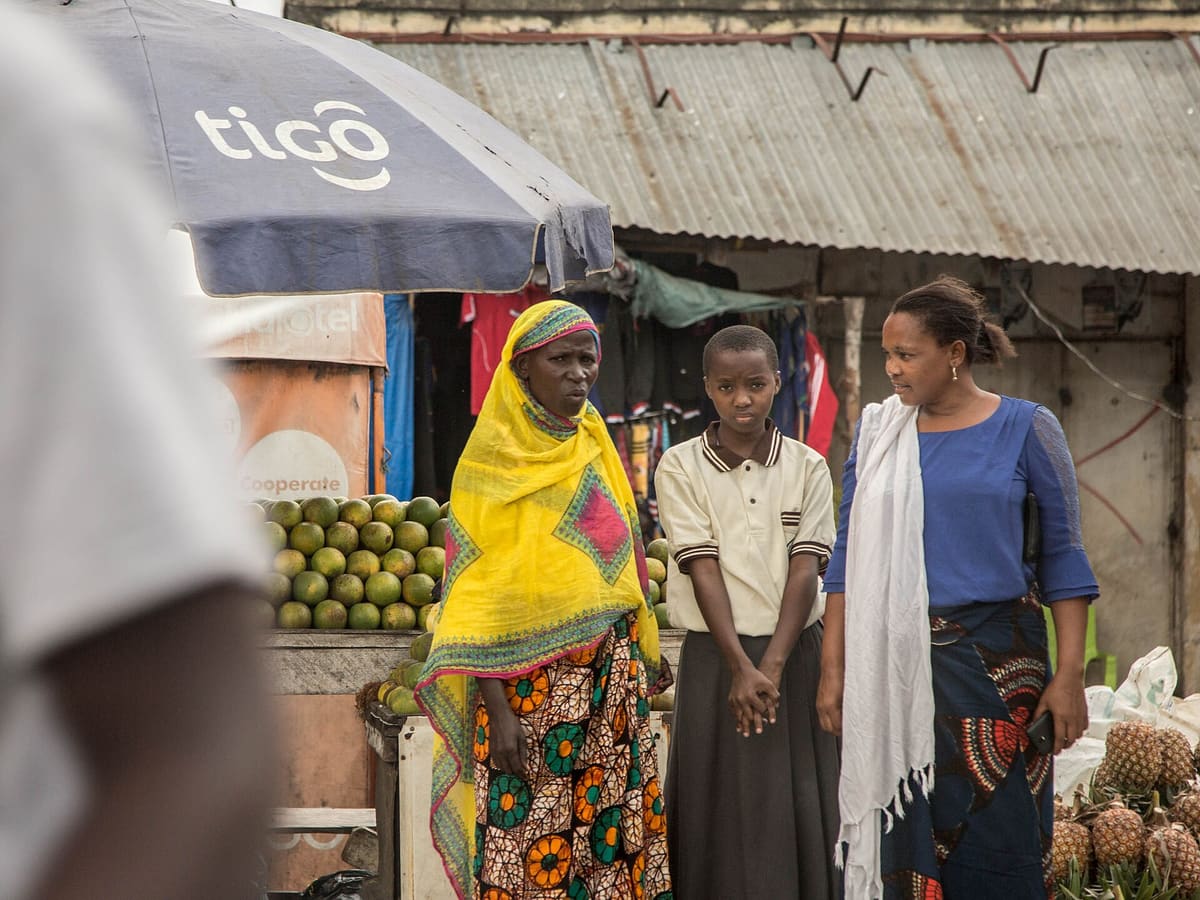
Nothing about your family is for sale
Never sold
Your photographs and records are not a product.
Never advertised against
There are no advertisers here to show them to.
Never used to train AI models
Not yours, and not anybody else's.
Never shared between families
Each family's tree is separate, and nothing crosses between them.
Printing is asked for separately
Using the app privately and having your name printed on a wall poster are two different things, and Ukoo Yangu treats them that way. Somebody might be perfectly happy appearing in the family's private tree and not want their name on a poster hanging in somebody's living room. So before any name goes on a poster, Ukoo Yangu asks that person directly. No answer means no name, not a guess either way. See how the poster works.
Take it with you, any time
A steward of your family can export the entire tree - every person, every relationship, the stories, the events and the details of every photograph - or delete the family permanently, whenever they choose. Nobody outside has to approve it and nobody can talk them out of it. Two honest caveats: the picture files themselves are not yet in the export, only their captions and dates, and neither action is a button yet - it is done on request.
Read the whole thing before you trust it.
The guide relatives read once they are inside is published openly, in full, so you can judge the rules before handing over a single birth year.
Invited by a relative? Open the link they sent you, or sign in.